Search Results
Search Results
Title Results
Your search returned 888 Titles

The TV Commercials is a recent compilation of Burden's four legendary television interventions, which date from 1973 to 1977. For each of these conceptual projects, Burden purchased commercial time on broadcast television and aired his own subversive "ads." Included are TV Ad: Through the Night Softly; Poem for L.A.; Chris Burden Promo, and Full Financial Disclosure.
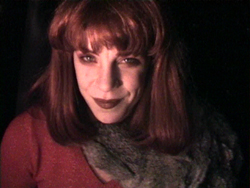
Originally projected in the interior of a customized Dodge at the 2001 Armory Show in New York, The Van features Bag as three young female artists riding in the back of a van, en route to the Armory Show. They compete for the attention of their gallerist Leroy, who, dressed as a pimp, promises them major recognition and designer handbags. As Bag derides the wish lists of the art-star hopefuls (the Turner Prize, the cover of ArtForum, Rosalind Krauss' critical attention, "more product endorsement"), she implicates the contemporary art world—herself included—in a bacchanal of greed.
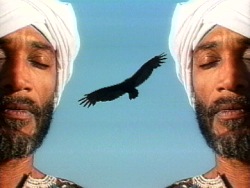
In this trilogy, Jenkins creates a series of video meditations on history and culture. Using archival footage, photographs, image processing, and an elegiac soundtrack, he pulls together diverse strands of thought to construct an "other" history. Self-Divination speaks poetically about origins...
Here Ahwesh's heterogeneous textual approach comes to the fore, as she juxtaposes narrative, faux documentary, comedic and "serious" footage, and merges film, video, and Pixelvision. Suggestions and meanings accumulate: austere, theoretical text is interrupted by shots of women relating bawdy (sexist) jokes; classic R&B music plays while women stomp on records and pour alcohol on the floor. The Vision Machine is a fragmented inquiry into issues of gender, language and representation.
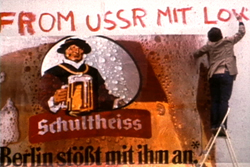
This newly assembled work is a rare document of a 1976 Matta-Clark performance in Berlin. The piece begins with the following statement: "In 1976, as part of the Akademie der Kunst and Berliner Festwochen exhibition 'Soho in Berlin,' Gordon Matta-Clark went to Germany with the intention of blowing up a section of the Berlin Wall. Dissuaded by friends from such a suicidal action, the result was the following performance." The film records Matta-Clark as he stencils 'Made in America' on the Wall, affixes commercial advertisements over graffiti, and has a run-in with the police.
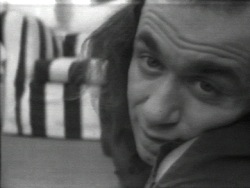
In Theme Song, Acconci uses video as close-up to establish a perversely intimate relation with the viewer, creating a personal space in which to talk directly to (and manipulate) the spectator. The film, with its ironic mixture of openness and manipulation, is one of Acconci's most effective works.
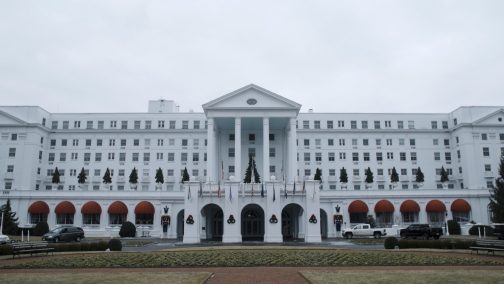
There Is Nothing Underneath the West Virginia Wing
Frank Heath
2018, 16:37 min, color, sound, HD video
Deep below the Greenbrier Hotel in White Sulphur Springs, West Virginia, is a vast and elaborate underground bomb shelter. Established as part of the secret Continuity of Government program, to house members of Congress in the event of a nuclear attack, the bunker is now declassified and open for public tours. This film documents the eerie spaces of the vacant shelter, its remarkable blast doors which were engineered by the Mosler Vault Company, and the dedicated staff who continue to care for it.
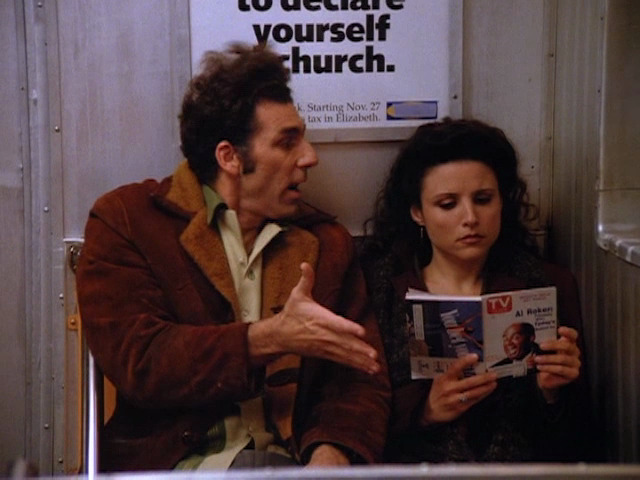
Seinfeld super-cut of all scenes dealing with Kramer's coffee table book about coffee tables.