Fundamental Motions: Recent Titles in Distribution
Fundamental Motions: Recent Titles in Distribution
264 Canal Street #3W
New York, NY 10013
7:00 pm ET
Fundamental Motions: Recent Titles in Distribution
264 Canal Street #3W
New York, NY 10013
7:00 pm ET
Fundamental Motions: Recent Titles in Distribution
264 Canal Street #3W
New York, NY 10013
7:00 pm ET
Works
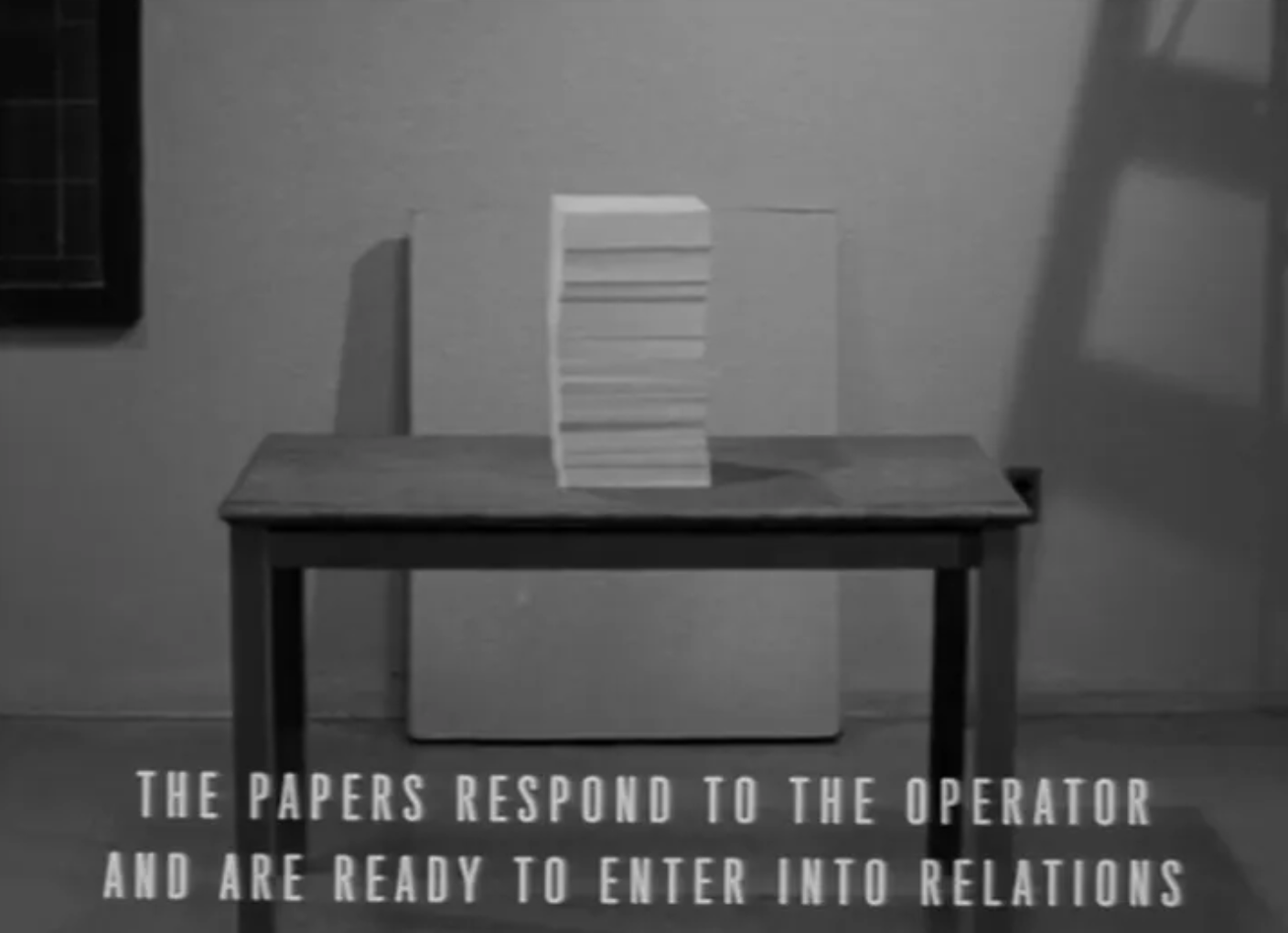
Beloff’s three-channel film incorporates staged reenactments and two archival films—Motion Studies Application and Folie a Deux—both industrial productions from the early 1950’s. Motion Studies teaches workers to maximize their efficiency through small movements, and Folie a Deux demonstrates how to identify the titular psychiatric disorder. Together, the films present the extremes of the productive and unproductive body and study their respective choreographies. A third sequence, inspired by slapstick productions, sets the two previous films into dialectical motion by depicting an office setting wherein objects take on a life of their own. As the materials mysteriously float, spin, and spill over, they disrupt the order of capitalist productivity.

Waje’s Cockabunnies is structured like the mid-century children’s television show “Romper Room,” in which the host leads children through activities and craft demonstrations. Breer captures Wojarowicz’s creative process as he sits at a child’s desk, cuts out bunny ears and tails, and secures them to the cockroaches with Q-tips and rubber cement. The audience, comprised of Breer, her sister and filmmaker Emily Breer, and Emily’s boyfriend David Baillie, frequently interjects with amused commentary and laughter.

From Michael Smith: “Mike emerges from pandemic isolation to discuss repainting the office break room with his less-than-enthused colleagues over Zoom. The tone of the meeting is underscored by his co-workers’ minimal engagement and their growing resentment to Mike's prolonged absence from the office.”

