Search Results
Search Results
Title Results
Your search returned 869 Titles
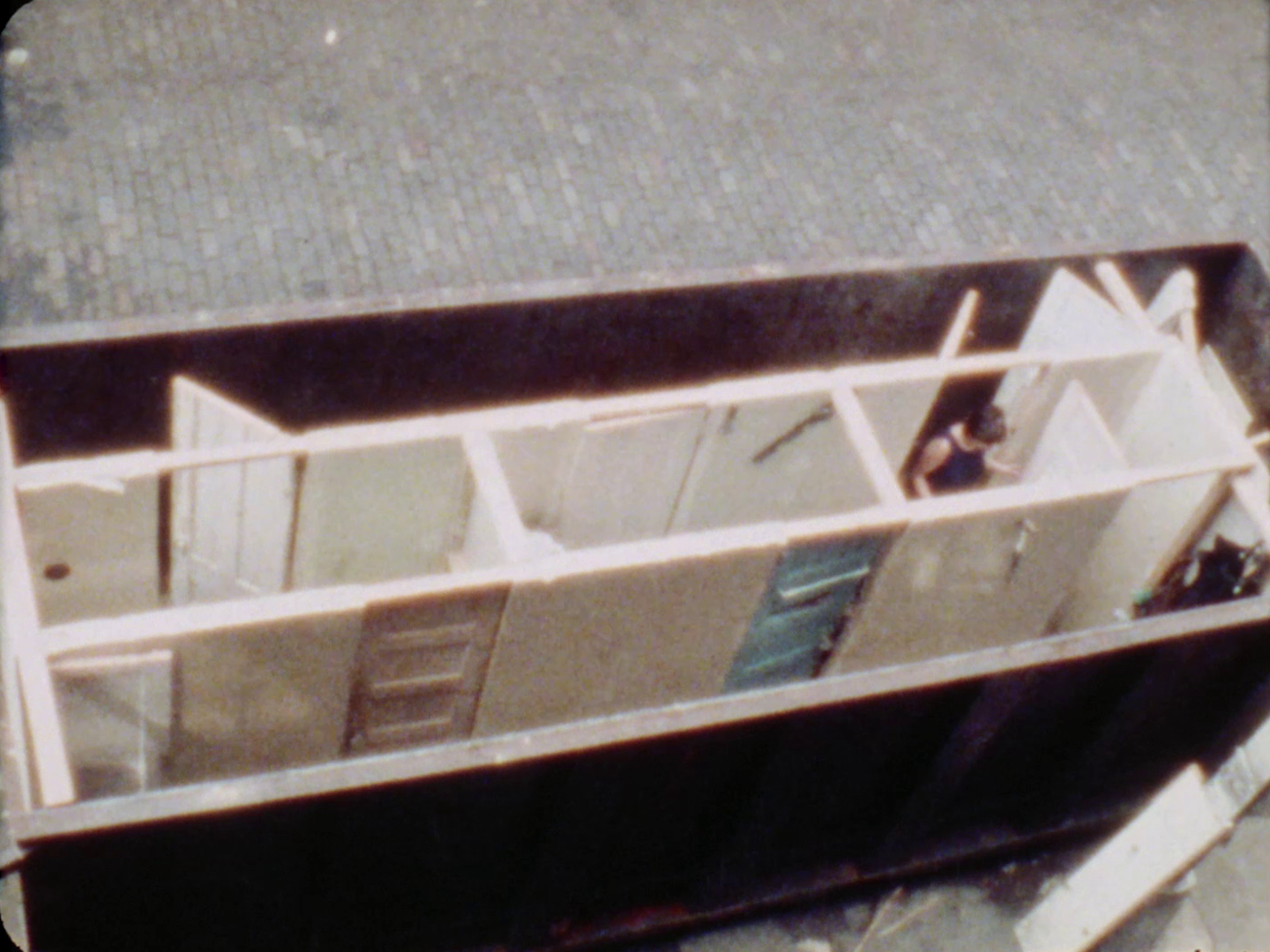
In May 1972, Matta-Clark installed an industrial waste container between 98 and 112 Greene Street in New York's SoHo district. He collected discarded doors and pieces of timber and divided the interior into three openings. This piece records an opening-day site performance by the artist, Tina Girouard, Keith Sonnier, and other friends.
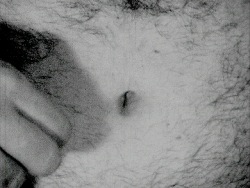
Acconci's body-based performances are often willfully provocative in their testing of physical limits and controlled actions. Here, as the camera frames Acconci's stomach in close up, he painstakingly pulls out each hair from the skin around his navel.
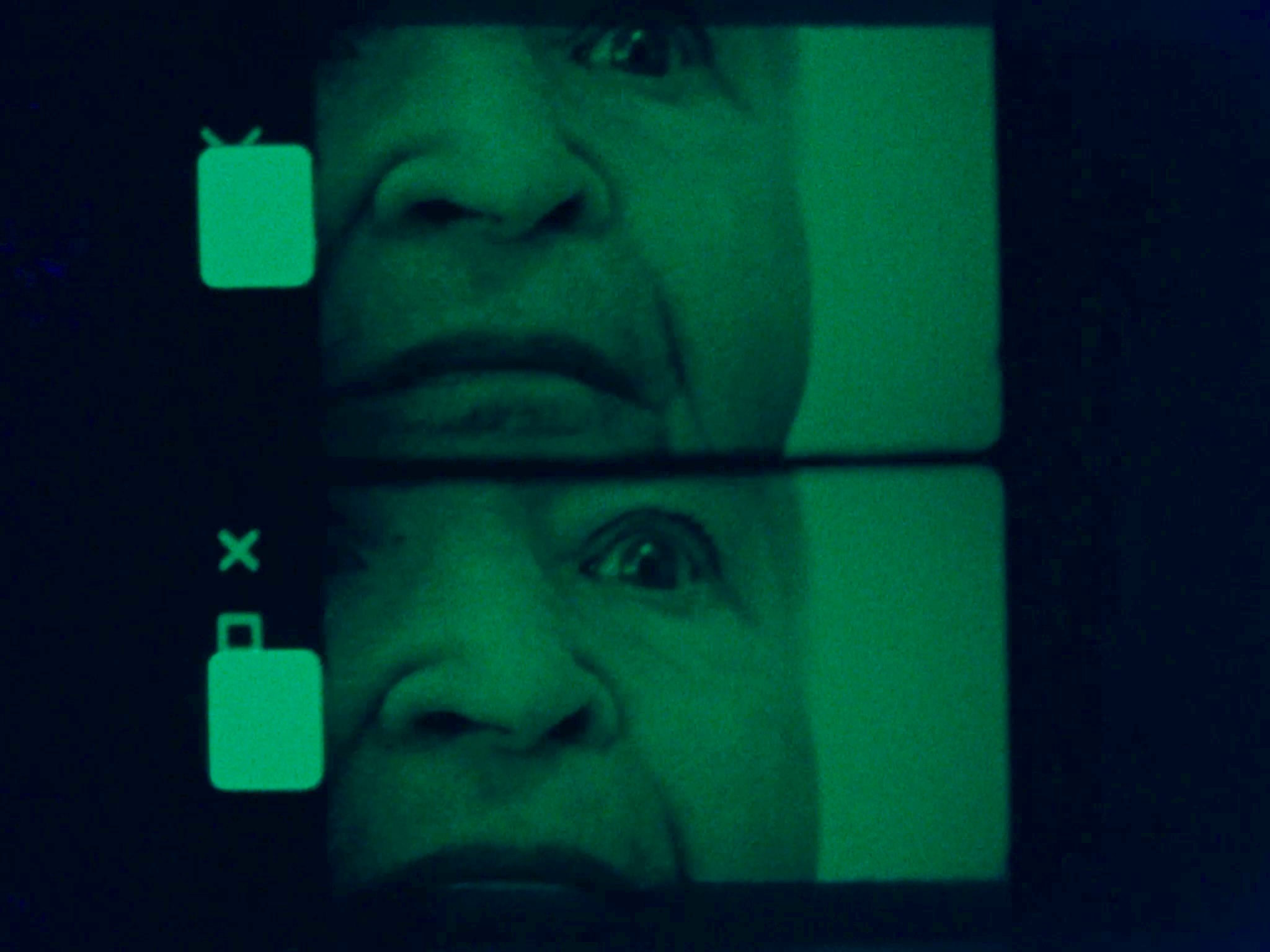
Barbara Hammer's Optic Nerve is a powerful personal reflection on family and aging. Hammer employs filmed footage which, through optical printing and editing, is layered and manipulated to create a compelling meditation on her visit to her grandmother in a nursing home.
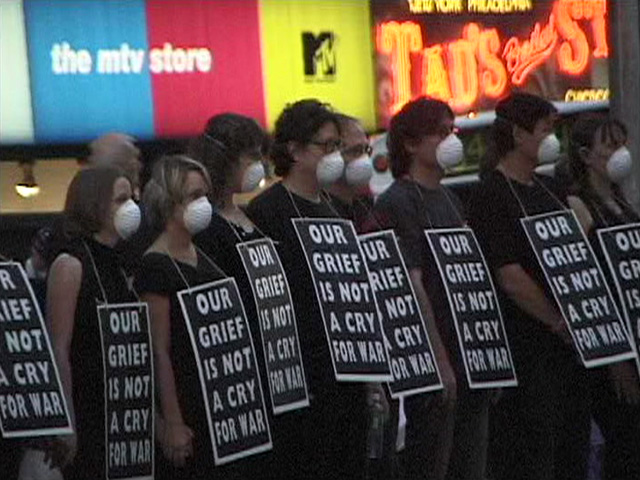
On October 11, 2001, in Times Square, New York City, an ad hoc group of artists named Our Grief Is Not a Cry for War silently demonstrated for peace at a time when the nation was clamoring for war and sacrificing its own civil liberties. Hammer documents the demonstration and, in so doing, makes her own contribution to the national post–September 11 dialogue.
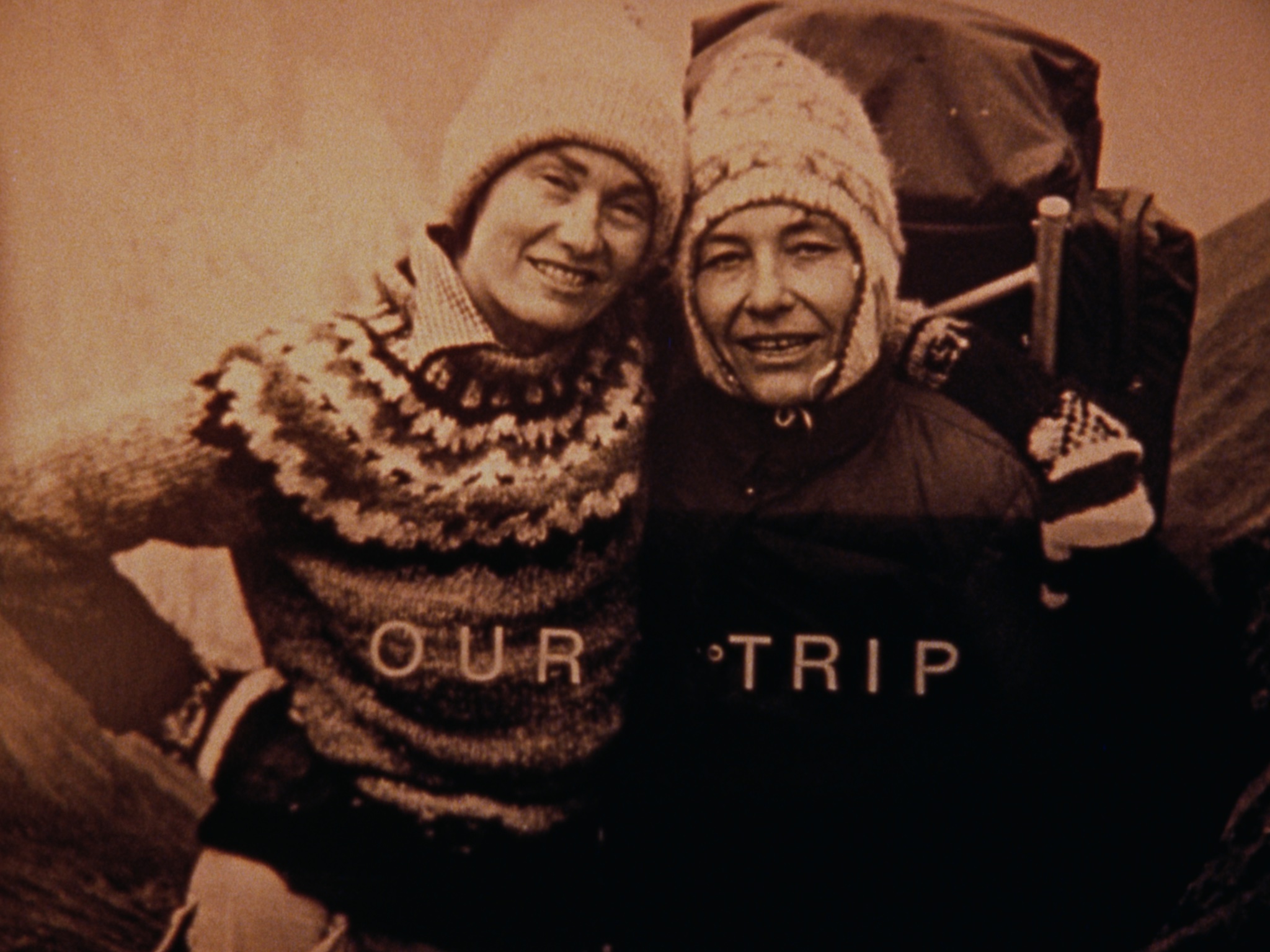
"Feminist filmmaker and performance artist Barbara Hammer has celebrated her recent trip to Peru with her friend Corky Wick through a diaristic animation of photographs they took during their travels. Landscapes and portraits are given growing patterns of framing and texture with magic markers...
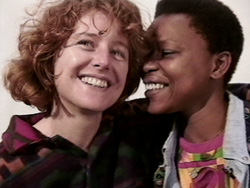
In the summer of 1994, Hammer was in invited to have a retrospective at the first Gay and Lesbian Film Festival on the African continent. In addition to screening her films there, Hammer created Out in South Africa, a documentary on race, sexual orientation, and civil rights in a transitional post-apartheid South Africa.
In this translation of Foreman's theatrical sensibility to video, the artist's own voice propels the interaction of elaborate wordplay and stylized tableaux of people and objects. A "young woman who finds herself surrounded by the relics of Western culture" is the starting point for Foreman's...
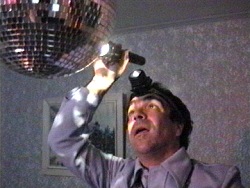
Mike gets nominated as an Outstanding Young Man of America and decides to have a party to celebrate. He digs out his Disco suits and, 'strutting his funky stuff' to the sound of Disco Inferno, sets up glitter balls and decorates the house. Night falls as Mike looks to the sky and contemplates his...
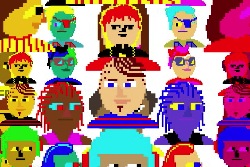
This delirious montage of appropriated and computer-generated elements merges perennial Paper Rad themes such as Gumby and the 8-bit computer aesthetic with a keen, critical take on contemporary culture. This self-described "mix tape" — a term that refers here both to the group's montage strategy and to popular compilations of bootlegged hit music — takes on the war in Iraq, the art market, and the images of ostentatious wealth and glamor flaunted by pop stars today.
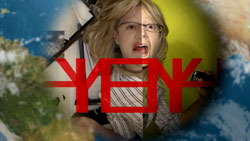
P.opular S.ky (section ish) submerges characters from other sections of Any Ever into an extreme poetic state where their creative limits bloom, but perhaps only on an illusory level. As the section "ish" (vs. section "a") to the works above, the movie's threads appear to be the culmination of situations initiated during other parts of Any Ever, but at the same time they are annexed as outcomes that might not be part of the official record.